
Need Help

Lorem ipsum dolor sit amet, movet iisque luptatum per ut. Duo te sonet accusata sadipscing, mollis dissentiet an eam, te qui brute apis.



Contact Us
Follow Us
Control Arm Replacement Services for Cars, Trucks & Commercial Vehicles
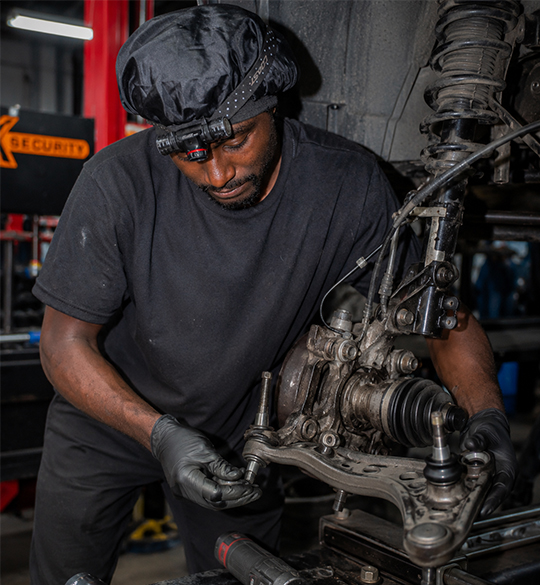
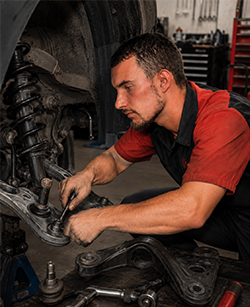
Control arms serve as critical connection points between the vehicle frame and wheel assemblies. These components help maintain proper wheel movement while supporting steering accuracy, ride quality, and suspension geometry. As mileage increases and road impacts accumulate, wear can develop within joints, bushings, and mounting points, affecting overall handling characteristics.
Professional control arm replacement helps restore structural integrity within the suspension system while supporting predictable vehicle behavior. Unlike components that show obvious external damage, control arm deterioration often develops gradually through repeated movement, road vibration, environmental exposure, and normal wear. Drivers frequently notice changes such as wandering steering, uneven tire wear, clunking sounds, vibration, or reduced handling precision. Early diagnosis helps prevent additional stress on connected assemblies while preserving ride stability.
Professional control arm replacement helps restore structural integrity within the suspension system while supporting predictable vehicle behavior. Unlike components that show obvious external damage, control arm deterioration often develops gradually through repeated movement, road vibration, environmental exposure, and normal wear. Drivers frequently notice changes such as wandering steering, uneven tire wear, clunking sounds, vibration, or reduced handling precision. Early diagnosis helps prevent additional stress on connected assemblies while preserving ride stability.
What Does a Control Arm Do?
Control arms guide wheel movement while allowing suspension travel across varying road surfaces. Their design helps maintain alignment angles during acceleration, braking, cornering, and everyday driving conditions.
A comprehensive evaluation may include
Control arm inspection
Ball joint assessment
Mounting point examination
Bushing condition review
Alignment verification
Suspension movement analysis
Hardware inspection
Road-test observations
A detailed evaluation helps assess structural components and identify wear affecting steering response or ride control. Accurate assessment creates a clearer understanding of overall suspension health before corrective action begins.
Why Control Arms and Bushings Wear Out
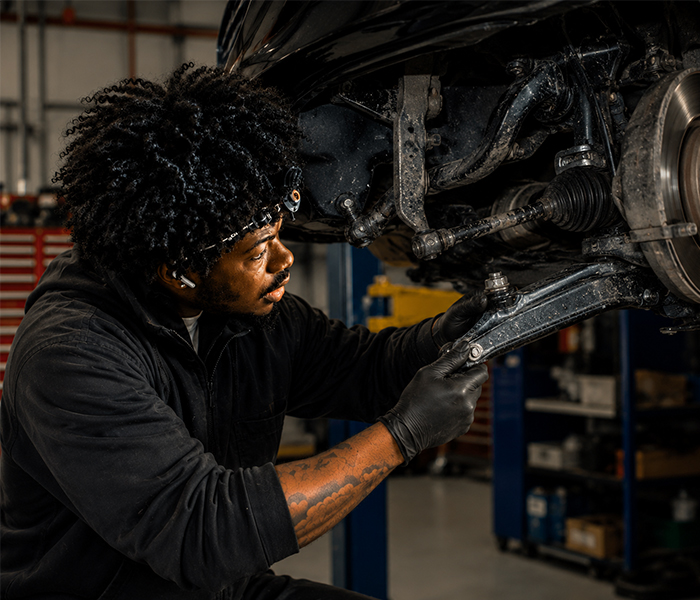
Suspension assemblies absorb constant forces generated by road irregularities, braking loads, cornering movements, and vehicle weight transfer. Over time, repeated stress can affect structural integrity and component movement.
Common causes include:
Common causes include:
- Road impact damage
- Bushing deterioration
- Corrosion exposure
- Ball joint wear
- Mounting fatigue
- Excessive vibration
Several warning signs may indicate developing issues:
- Clunking noises
- Uneven tire wear
- Steering drift
- Vibration through the wheel
- Reduced handling precision
- Irregular alignment angles
Many motorists researching control arm bushing replacement discover that worn bushings can influence steering feel, suspension movement, and overall vehicle stability long before complete component failure occurs.
How Replacement Improves Handling and Steering Response
Worn suspension components can affect alignment accuracy and wheel positioning. As movement becomes less controlled, steering precision may decline and tire wear patterns may appear more noticeable.
Potential benefits may include
Improved directional stability
More consistent steering response
Better alignment retention
Reduced vibration
Smoother suspension articulation
Enhanced driving confidence
Understanding Upper and Lower Control Arm Service Requirements
Not all suspension assemblies experience identical loads. Different mounting positions perform unique functions and encounter varying stress levels throughout daily operation. An upper control arm replacement may become necessary when inspection reveals excessive movement, joint wear, structural damage, or deteriorated bushings affecting suspension travel. A lower control arm replacement is commonly recommended when structural integrity, mounting stability, or joint function no longer meets operational requirements. Since lower assemblies often manage substantial load forces, deterioration can influence alignment characteristics and overall ride quality.
Inspection findings frequently evaluate
Joint condition
Bushing integrity
Mounting stability
Structural wear
Alignment influence
Movement consistency
Understanding these differences helps technicians recommend the most appropriate corrective action based on verified inspection findings.
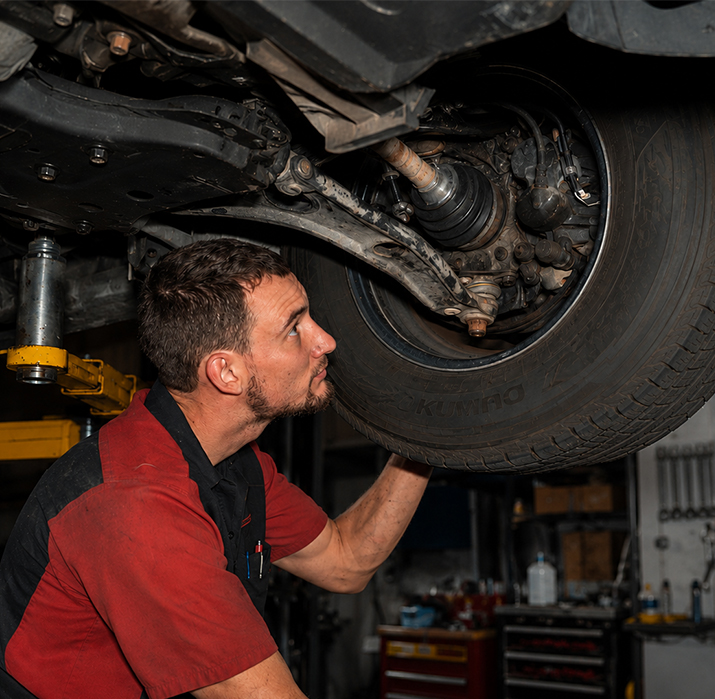
When Should Suspension Components Be Evaluated?
Suspension concerns rarely appear without warning. Many changes begin subtly before becoming more noticeable during daily driving.
Drivers often seek assistance after experiencing:
Drivers often seek assistance after experiencing:
- Vehicle pulling
- Uneven tire wear
- Steering looseness
- Road vibration
- Impact-related noises
- Reduced ride quality
Many vehicle owners searching online for car suspension repair, suspension repair, or suspension repair near me are seeking answers about symptoms affecting comfort, handling, or steering behavior. Diagnostic evaluation helps identify the source of these conditions while establishing a clear service path. A complete assessment may also reveal related issues requiring attention during the same visit, helping maintain long-term suspension performance and reducing future maintenance concerns.
Maintain Stable Handling and Suspension Performance
Worn control arms, deteriorated bushings, and excessive suspension movement can affect steering accuracy, tire wear, and overall driving confidence. Ignoring these symptoms may allow additional stress to develop across connected components.
Professional inspection can verify component condition, identify wear patterns, and determine the most effective corrective action based on inspection findings.
Professional inspection can verify component condition, identify wear patterns, and determine the most effective corrective action based on inspection findings.
FAQs
1
What is a suspension control arm replacement?A suspension control arm replacement involves removing a worn or damaged control arm and installing a new one. This service helps restore proper wheel alignment, steering response, and suspension stability.
2
How do I know if my vehicle needs a control arm replacement?Common signs include clunking noises, uneven tire wear, steering vibration, pulling to one side, and poor handling. A professional inspection can confirm if the control arm is the cause.
3
What are the symptoms of a bad control arm?A bad control arm may cause knocking sounds, loose steering, irregular tire wear, and unstable handling. In severe cases, the vehicle may wander or feel unsafe during turns.
4
What is lower control arm replacement?Lower control arm replacement involves replacing the suspension component that connects the wheel assembly to the frame. This repair helps restore alignment, ride quality, and steering control.
5
How long does a suspension control arm replacement take?Most control arm replacements take one to three hours, depending on the vehicle design and the condition of related components. Additional alignment services may increase repair time.
6
What happens if I delay a control arm replacement?Delaying repairs can lead to uneven tire wear, poor handling, alignment problems, and additional suspension damage. Ignoring the issue may also reduce overall driving safety.
7
What vehicles commonly require lower control arm replacement?Any vehicle can require lower control arm replacement as components wear with age and mileage. SUVs, trucks, and high-mileage vehicles often experience this repair more frequently.
8
When is upper control arm replacement necessary?Upper control arm replacement is usually needed when bushings, ball joints, or the arm itself becomes worn or damaged. Symptoms often include clunking noises and alignment issues.
9
Can a bad alignment indicate I need a lower control arm replacement?Yes. If alignment problems keep returning or cannot be corrected properly, a worn lower control arm or damaged bushing may be the underlying cause.
10
How does a faulty control arm affect tire wear?A faulty control arm can allow excessive wheel movement and improper alignment angles. This often causes uneven or accelerated tire wear and may shorten tire life significantly.