
Need Help

Lorem ipsum dolor sit amet, movet iisque luptatum per ut. Duo te sonet accusata sadipscing, mollis dissentiet an eam, te qui brute apis.







Contact Us
Follow Us
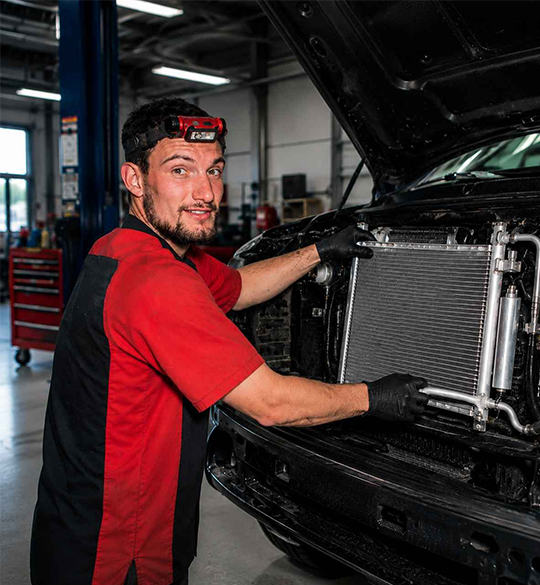

Professional AC Condenser Solutions for Cars, Trucks & Commercial Fleets
Cold air inside a vehicle depends on several climate-control components working together, and the cooling assembly is one of the most important parts in that process. This unit releases heat absorbed by refrigerant and allows the cooling cycle to continue. Once damage develops, cabin temperatures can rise quickly and air conditioning performance may drop significantly.
Reduced cabin comfort, visible leaks, or inconsistent vent temperatures often indicate that inspection is needed. A professional car AC condenser replacement starts with a detailed examination of the entire air conditioning system. Testing identifies the source of the problem and determines if surrounding components have also been affected.
Timely attention can prevent additional strain on compressors, hoses, pressure switches, and cooling fans. Replacing a failed cooling component at the right stage often restores comfort and helps avoid larger repair expenses later.
Timely attention can prevent additional strain on compressors, hoses, pressure switches, and cooling fans. Replacing a failed cooling component at the right stage often restores comfort and helps avoid larger repair expenses later.
What Happens During an AC Condenser Replacement Service?
Condenser service involves much more than installing a new component. Technicians evaluate the entire refrigeration circuit to ensure that every part operates correctly after the damaged unit is removed.
A standard appointment may include
Refrigerant recovery
Pressure measurements
Leak inspection
Unit removal
Seal installation
System evacuation
Refrigerant recharge
Temperature verification
Many vehicle owners researching AC condenser replacement ask one common question: can poor air conditioning performance be fixed without replacing the cooling assembly? The answer depends on the condition of the component, the amount of refrigerant loss, and the presence of contamination inside the system.
A complete evaluation helps determine the most practical solution while protecting connected climate-control equipment.
A complete evaluation helps determine the most practical solution while protecting connected climate-control equipment.
What Causes an Automotive Condenser to Stop Working?
The condenser sits near the front of the vehicle and remains exposed to harsh environmental conditions every day. Dirt, moisture, stones, insects, and road debris can gradually damage delicate passages and cooling fins.
Several conditions commonly lead to failure
Impact from road debris
Corrosion development
Internal contamination
Crushed cooling fins
Refrigerant leakage
Collision-related damage
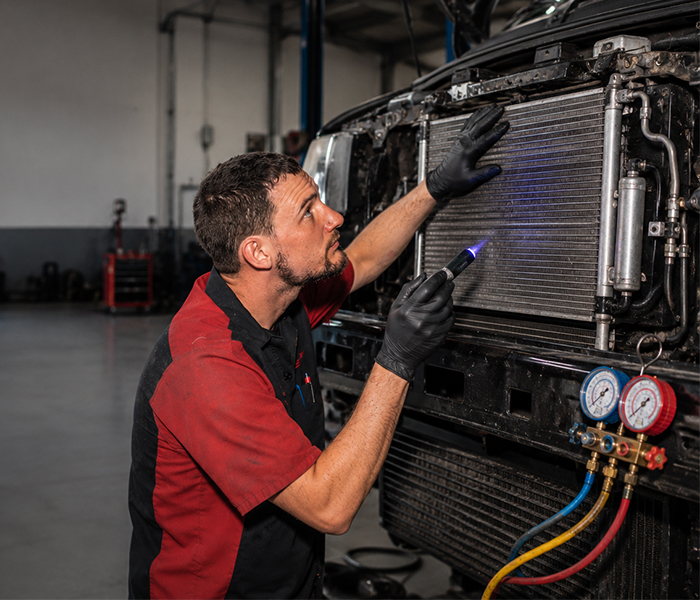
How Do Technicians Identify a Faulty Condenser?
Accurate diagnosis prevents unnecessary parts replacement. Poor air conditioning performance can result from several different issues, which makes proper testing an essential part of the repair process.
Inspection procedures often include:
Inspection procedures often include:
- Visual examination
- Leak detection testing
- Pressure analysis
- Airflow evaluation
- Electronic system checks
- Cooling performance measurements
Drivers considering auto AC condenser repair often seek confirmation that the cooling component is truly responsible. Detailed testing helps separate condenser issues from fan failures, refrigerant restrictions, sensor problems, or compressor concerns.
Professional diagnostics create a clearer repair plan and increase the likelihood of restoring consistent air conditioning performance.
Professional diagnostics create a clearer repair plan and increase the likelihood of restoring consistent air conditioning performance.
What Symptoms Suggest Condenser Attention Is Needed?
Cooling-component problems usually develop gradually. Small leaks or restricted airflow may initially produce only minor changes in air conditioning performance.
Common warning signs include
Warm air from dashboard vents
Longer cabin cooling times
Oily residue near the grille area
Reduced cold-air output while idling
Unusual noises during operation
Uneven temperatures inside the vehicle
People searching vehicle AC condenser service often describe one or more of these conditions. Prompt inspection can identify developing issues before complete air conditioning failure occurs.
Even a small refrigerant leak can reduce efficiency and place additional strain on connected components.
Even a small refrigerant leak can reduce efficiency and place additional strain on connected components.
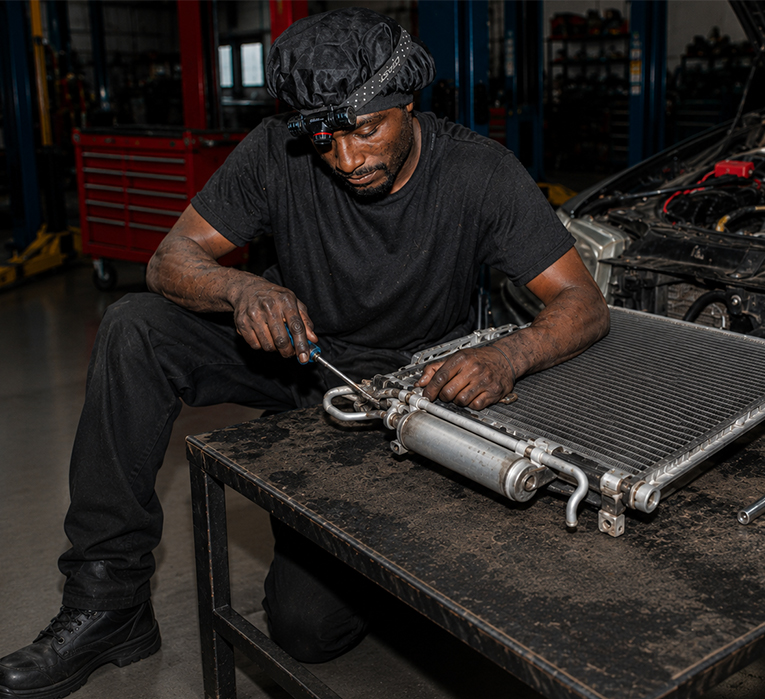
Can a Condenser Be Repaired Instead of Replaced?
Replacement is not always necessary. Certain conditions can be corrected when the cooling assembly remains in good condition and damage is limited to smaller areas.
Repair may be possible in situations involving:
Repair may be possible in situations involving:
- Minor leakage
- Light fin damage
- Restricted airflow
- Dirt accumulation
- Worn sealing components
- Surface contamination
Drivers comparing replacement estimates with car air conditioner condenser repair or vehicle condenser repair options often want the most practical long-term solution. A professional assessment helps determine if repair can restore dependable operation or if replacement offers better reliability.
Restore Reliable Cabin Cooling
Warm airflow, refrigerant loss, and reduced climate efficiency can make everyday driving uncomfortable and may eventually lead to larger mechanical concerns. A detailed inspection identifies the source of the issue and helps determine the most effective corrective action.
Professional cooling-system diagnosis and precise installation procedures help return the air conditioning system to dependable operation and improve long-term performance.
Schedule an inspection today and learn which solution can restore consistent temperature control and comfortable driving conditions.
Professional cooling-system diagnosis and precise installation procedures help return the air conditioning system to dependable operation and improve long-term performance.
Schedule an inspection today and learn which solution can restore consistent temperature control and comfortable driving conditions.
FAQs
1
What are the signs that I need an AC condenser replacement for my car?Common signs include warm air from the vents, refrigerant leaks, a burning smell, or visible damage near the front of the vehicle. These symptoms often indicate that an AC condenser replacement may be necessary.
2
How do I know if my car AC condenser needs replacement?A professional inspection can determine if the condenser is clogged, leaking, or physically damaged. Reduced cooling performance and refrigerant loss are often signs that a car AC condenser replacement is needed.
3
What happens if I don’t fix my vehicle AC condenser? Ignoring condenser problems can reduce air conditioning performance and place additional stress on other components, including the compressor. Continued operation may lead to more expensive repairs.
4
Will replacing the condenser improve my car’s AC efficiency? Yes. Installing a new condenser can restore proper heat transfer and improve cooling performance. An effective condenser also helps the entire air conditioning assembly operate more efficiently.
5
Can a damaged AC condenser be repaired instead of replaced? Minor issues may sometimes be addressed through auto AC condenser repair, but leaks, severe corrosion, or physical damage often require complete replacement to restore dependable performance.
6
What happens if I ignore a faulty car AC condenser? A faulty condenser can lead to poor cooling, refrigerant loss, and increased strain on other air conditioning components. Delaying repairs may eventually contribute to compressor failure.
7
What type of condenser is used in car AC systems? Most modern vehicles use an aluminum parallel-flow condenser because it provides efficient heat transfer and compact packaging. The exact design depends on the vehicle manufacturer and model.
8
Will AC condenser replacement fix my car's poor cooling performance? If the condenser is the source of the problem, an AC condenser replacement can significantly improve cooling performance. However, other components may also need inspection if the issue persists.
9
How often should I get my car's AC condenser inspected?An inspection is recommended during routine air conditioning maintenance or anytime cooling performance changes noticeably. Regular evaluations can identify leaks and damage before major failures occur.
10
Is it worth replacing the condenser on an AC unit in a car? Yes, replacing a failed condenser is often worthwhile because it restores cooling performance and helps protect other components from additional damage. Professional car air conditioner condenser repair or replacement can also improve long-term reliability.