
Need Help

Lorem ipsum dolor sit amet, movet iisque luptatum per ut. Duo te sonet accusata sadipscing, mollis dissentiet an eam, te qui brute apis.






Contact Us
Follow Us
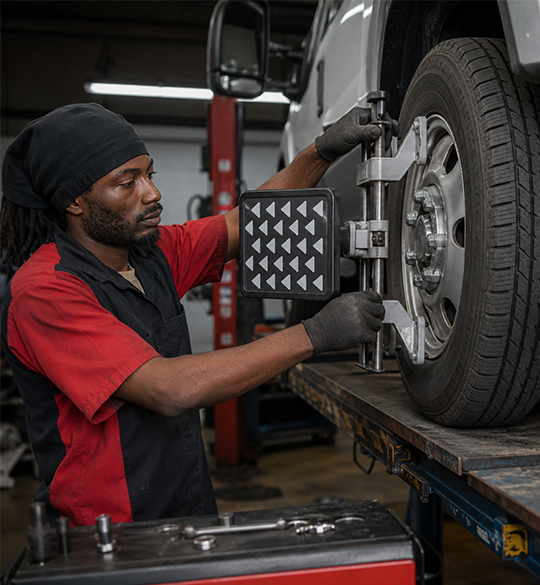
Wheel Alignment Solutions for Cars, Trucks & Commercial Fleets
Steering precision, road stability, ride smoothness, and component longevity all depend on accurate wheel geometry. Everyday travel, potholes, curb contact, uneven road surfaces, and normal mechanical wear can gradually change critical measurements that influence how each tire meets the road.
A professional wheel alignment service helps restore factory-specified settings through detailed measurement and adjustment of alignment angles. Correct geometry supports predictable handling, promotes even tread contact, and contributes to a more comfortable driving experience across passenger vehicles and commercial units.
Regular alignment inspections help identify developing concerns before they affect drivability, operating costs, or overall vehicle performance.
Regular alignment inspections help identify developing concerns before they affect drivability, operating costs, or overall vehicle performance.
What Is Included in a Wheel Alignment Service?
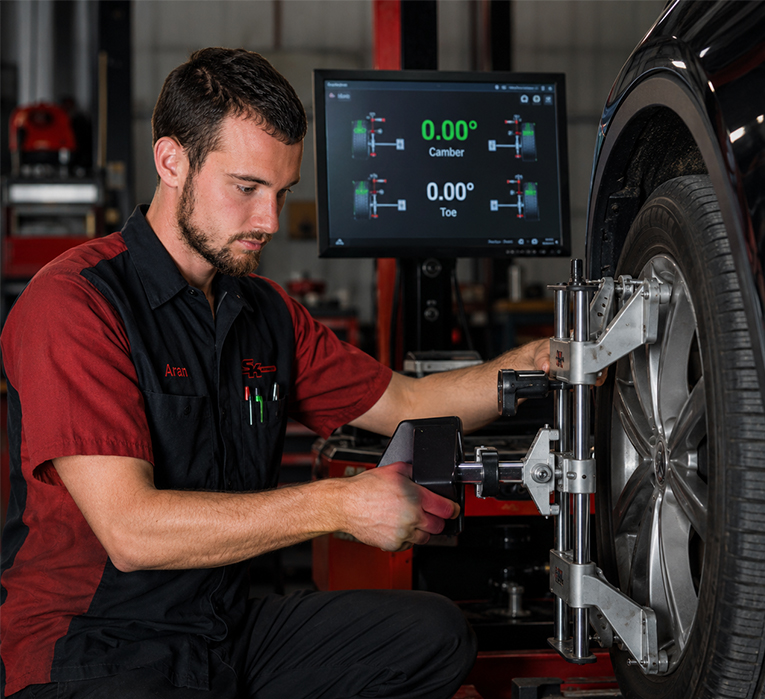
Alignment work involves evaluating suspension and steering geometry using computerized measuring equipment. Readings are compared with manufacturer specifications, allowing technicians to identify variations that may influence road behavior.
A typical inspection may include
Suspension system assessment
Steering linkage review
Camber analysis
Caster evaluation
Toe adjustment
Rim condition inspection
Final measurement verification
Many motorists searching for a Car wheel alignment service want reassurance that key steering and suspension components remain properly positioned. Even small measurement variations can influence handling response, directional tracking, and tread life.
Modern vehicles rely on precise geometry across multiple interconnected systems. Accurate calibration helps maintain intended operating characteristics while supporting consistent performance during daily driving.
Modern vehicles rely on precise geometry across multiple interconnected systems. Accurate calibration helps maintain intended operating characteristics while supporting consistent performance during daily driving.
Why Does Alignment Accuracy Matter?
Suspension angles directly influence pavement contact during acceleration, braking, and cornering. When these measurements move outside recommended ranges, uneven load distribution can develop across the contact surface.
Potential effects of incorrect settings include
Irregular tread deterioration
Vehicle drift
Increased fuel consumption
Additional rolling resistance
Reduced handling consistency
Greater stress on suspension parts
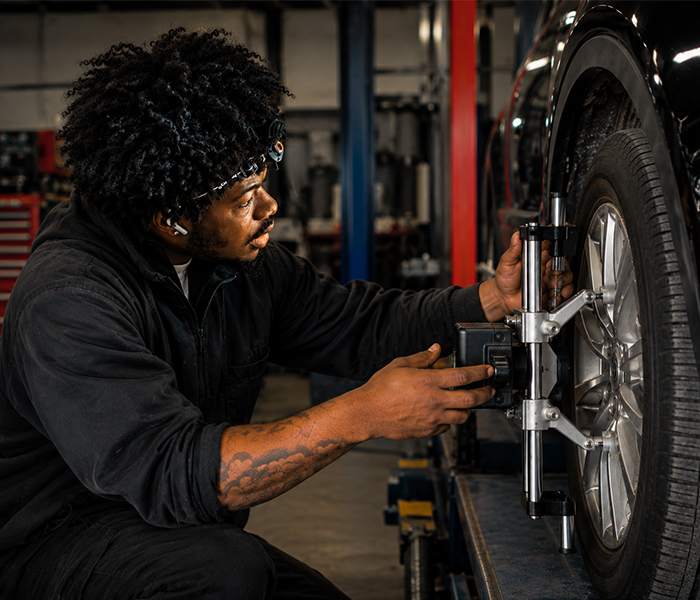
How Does Alignment Improve Vehicle Operation?
Correct suspension settings contribute to the performance of several vehicle systems. Steering response, braking stability, ride quality, and overall control benefit when measurements remain within manufacturer recommendations.
Key advantages include:
Key advantages include:
- Better straight-line stability
- More responsive steering
- Improved cornering confidence
- Enhanced ride quality
- Greater operational efficiency
- Smoother road behavior
Vehicle owners often compare available automotive alignment services when seeking solutions to handling concerns. Precision adjustments help restore intended driving characteristics while reducing unnecessary strain on connected mechanical components.
Accurate geometry allows rolling surfaces to move naturally with less resistance, supporting improved comfort and more controlled operation.
Accurate geometry allows rolling surfaces to move naturally with less resistance, supporting improved comfort and more controlled operation.
What Signs Suggest Alignment Correction May Be Needed?
Positioning issues can develop gradually due to road impacts, worn suspension parts, or everyday driving conditions. Several indicators may suggest that an inspection is warranted.
Common warning signs include
Pulling during straight travel
Crooked steering wheel position
Uneven tread patterns
Reduced directional control
Noticeable vibration
Difficulty maintaining a straight path
Drivers searching car alignment near me frequently experience one or more of these symptoms. Early evaluation helps limit additional wear while preserving ride quality and handling consistency.
Routine inspections create opportunities to identify developing concerns before they lead to larger maintenance requirements.
Routine inspections create opportunities to identify developing concerns before they lead to larger maintenance requirements.
Which Vehicles Benefit From Alignment Maintenance?
Sedans, SUVs, pickup trucks, cargo vans, and commercial fleet vehicles all depend on accurate suspension geometry. Different operating environments place varying demands on steering and chassis systems, making periodic inspections beneficial across many vehicle categories.
Common benefits include:
Common benefits include:
- Extended tread life
- Improved steering accuracy
- Better road control
- Lower rolling resistance
- Increased driver confidence
- More predictable handling
Many businesses include tires & alignment inspections within preventive maintenance programs to help reduce avoidable operating costs and support fleet reliability.
Drivers planning routine front-end maintenance may also look for wheel alignment specials when scheduling service appointments and inspections.
Drivers planning routine front-end maintenance may also look for wheel alignment specials when scheduling service appointments and inspections.
Improve Steering Precision and Tire Longevity
Incorrect suspension geometry can gradually affect handling, ride comfort, directional stability, and tread condition. Periodic inspections help identify positioning concerns before they develop into larger mechanical issues.
Motorists seeking dependable Car tire alignment services or a professional wheel alignment service can benefit from precise measurement and adjustment procedures designed to support smoother travel, improved vehicle control, and longer-lasting tread performance.
Schedule an alignment inspection today to help maintain consistent handling, balanced road contact, and reliable day-to-day operation.
Motorists seeking dependable Car tire alignment services or a professional wheel alignment service can benefit from precise measurement and adjustment procedures designed to support smoother travel, improved vehicle control, and longer-lasting tread performance.
Schedule an alignment inspection today to help maintain consistent handling, balanced road contact, and reliable day-to-day operation.
FAQs
1
What is a wheel alignment service and why does my car need it? A wheel alignment service adjusts the angles of the wheels so they meet manufacturer specifications. Proper alignment improves handling, supports even tire wear, and helps the vehicle track straight on the road.
2
Is it really necessary to get a wheel alignment?Yes. Regular alignment checks help maintain steering performance and reduce uneven tire wear. A properly aligned vehicle also places less stress on suspension and steering components.
3
What happens if I don't do a wheel alignment? Ignoring alignment issues can lead to rapid tire wear, poor handling, and reduced driving comfort. Over time, additional strain may affect suspension parts and increase repair costs.
4
What are the signs my car needs tire alignment service?Common signs include pulling to one side, an off-center steering wheel, uneven tread wear, and steering wheel vibration. These symptoms often indicate that a tire alignment service is needed.
5
Can bad wheel alignment damage my tires?Yes. Misaligned wheels can cause tires to wear unevenly and shorten their lifespan. Correcting alignment issues early helps protect your tire investment and improves overall performance.
6
What is included in a full tire alignment service? A complete Car wheel alignment service usually includes inspecting suspension components, measuring wheel angles, and adjusting camber, caster, and toe settings to manufacturer specifications.
7
What happens if I ignore a wheel alignment issue? A neglected alignment problem can worsen over time and create handling concerns, increased tire wear, and reduced fuel efficiency. Long-term neglect may also contribute to premature suspension wear.
8
Is it okay to drive with a bad wheel alignment?Driving with poor alignment is possible for short periods, but it is not recommended. The condition can affect vehicle control and cause unnecessary damage to tires and steering components.
9
How does alignment maintenance protect my tires & alignment components?Routine automotive alignment services help keep wheels positioned correctly, reducing stress on tires and suspension parts. Proper maintenance supports even tread wear and promotes smoother handling.
10
Can a wheel alignment help my tires last longer?Yes. A properly performed wheel alignment service helps distribute tire wear more evenly, which can extend tire life and improve overall driving performance.