
Need Help

Lorem ipsum dolor sit amet, movet iisque luptatum per ut. Duo te sonet accusata sadipscing, mollis dissentiet an eam, te qui brute apis.


Contact Us
Follow Us
Protecting Engine Synchronization Through Timely Timing Belt Replacement
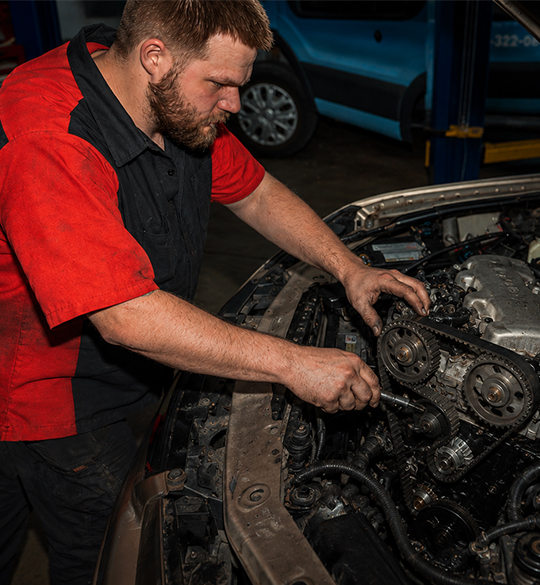
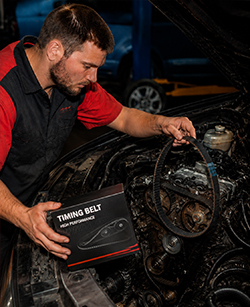
A timing belt plays a critical role in engine operation by synchronizing the crankshaft and camshaft. This coordination allows valves and pistons to move in precise sequence during combustion. When belt wear progresses beyond recommended service intervals, the risk of component failure increases significantly. In many engines, a broken belt can lead to severe internal damage affecting valves, pistons, and related assemblies.
Professional timing belt replacement helps maintain accurate engine timing while reducing the likelihood of expensive mechanical repairs. Unlike visible maintenance items, belt deterioration often occurs inside protective covers where signs of wear remain hidden. Age, mileage, temperature changes, and operating conditions all contribute to gradual material degradation. Many motorists begin researching replacement options after approaching manufacturer-recommended intervals or receiving maintenance reminders during routine inspections.
Professional timing belt replacement helps maintain accurate engine timing while reducing the likelihood of expensive mechanical repairs. Unlike visible maintenance items, belt deterioration often occurs inside protective covers where signs of wear remain hidden. Age, mileage, temperature changes, and operating conditions all contribute to gradual material degradation. Many motorists begin researching replacement options after approaching manufacturer-recommended intervals or receiving maintenance reminders during routine inspections.
What Is Included During a Timing Belt Service?
A complete timing belt service involves more than installing a new belt. Several related components work together within the timing system and should be evaluated during the procedure.
A typical appointment may include
Timing belt inspection
Tensioner evaluation
Idler pulley assessment
Water pump review
Timing cover inspection
Seal examination
Alignment verification
System synchronization testing
A detailed assessment helps identify worn supporting hardware that could affect long-term reliability. Replacing related components during the same visit often reduces future labor requirements while helping maintain proper timing system operation.
Why Timing Belts Require Scheduled Replacement
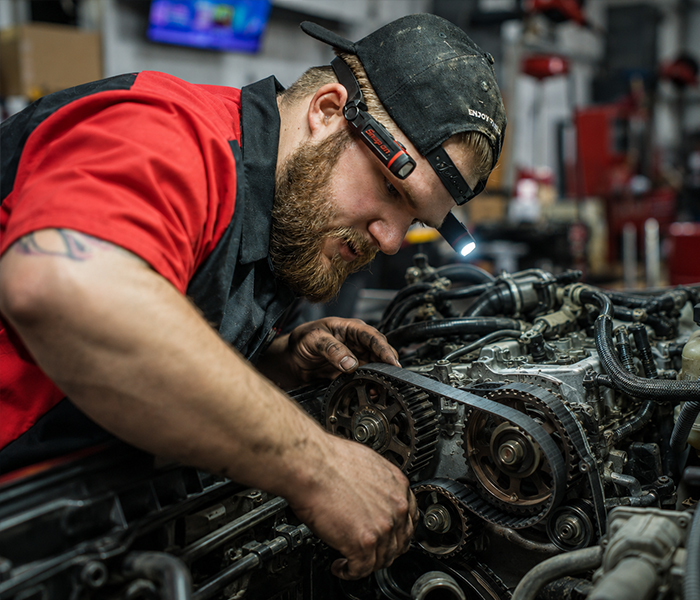
Timing belts operate under constant tension while rotating thousands of times during normal driving. Over time, belt material experiences wear caused by heat cycles, age, contamination, and continuous movement.
Several factors commonly influence service life:
Several factors commonly influence service life:
- Mileage accumulation
- Age-related deterioration
- Oil contamination
- Temperature exposure
- Tensioner wear
- Pulley degradation
Unlike many components that provide obvious warning signs, timing belts can fail without significant advance notice. This makes adherence to manufacturer maintenance schedules especially important. Delaying car timing belt replacement beyond recommended intervals may increase the possibility of internal engine damage and unexpected breakdowns.
How Replacement Protects Internal Engine Components
Accurate valve timing is essential for efficient engine operation. Belt material can weaken over time, creating the potential for synchronization loss or complete failure.
Benefits associated with proactive service may include
Maintained valve synchronization
Reduced failure risk
Improved engine reliability
Protection against internal damage
Consistent engine operation
Greater long-term dependability
Timing Belt vs. Timing Chain: Understanding the Difference
Many motorists researching timing system maintenance encounter questions regarding timing chain vs belt replacement. Although both components perform the same basic function, their construction, service intervals, and maintenance requirements differ considerably. Timing belts are manufactured from reinforced rubber compounds and typically follow manufacturer-recommended service intervals. Timing chains utilize metal links and often remain in service longer, although they can still experience wear involving guides, tensioners, or lubrication-related concerns.
Inspection findings frequently evaluate
Belt condition
Tension consistency
Pulley operation
Component alignment
Wear indicators
Service history
Understanding which system is installed helps owners follow appropriate maintenance recommendations and avoid unexpected timing-related failures.
When Should Timing Belt Service Be Scheduled?
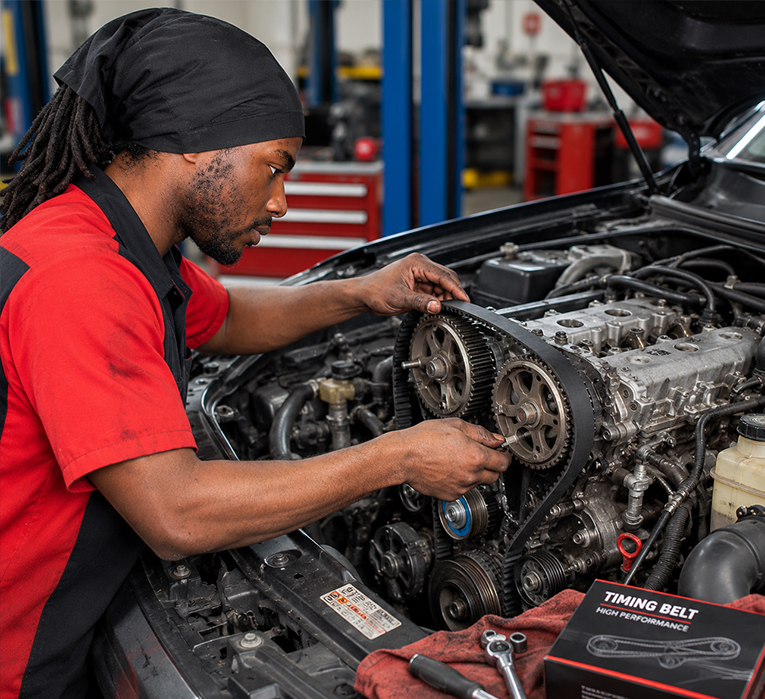
Service intervals vary according to manufacturer specifications, engine design, operating conditions, and vehicle age. Maintenance schedules are generally established based on extensive engineering testing and should be followed closely.
Several factors commonly influence replacement schedules:
Several factors commonly influence replacement schedules:
- Manufacturer recommendations
- Vehicle age
- Accumulated mileage
- Driving conditions
- Maintenance history
- Component condition
Online searches often include terms such as timing belt replacement, engine timing belt repair, or timing belt service when owners seek information regarding maintenance requirements. Questions regarding replacement schedules are among the most common concerns associated with long-term engine care. A documented service history helps maintain vehicle value while providing confidence that critical timing components have been addressed at appropriate intervals.
Protect Your Engine Before Timing Belt Failure Occurs
Belt deterioration often develops without obvious symptoms, making scheduled replacement one of the most important preventive maintenance services available. Ignoring recommended intervals can increase the likelihood of severe internal engine damage and unexpected breakdowns.
Professional inspection can determine system condition, verify maintenance requirements, and identify related components that may require attention during service.
Professional inspection can determine system condition, verify maintenance requirements, and identify related components that may require attention during service.
FAQs
1
What is a timing belt, and why is regular maintenance important? A timing belt synchronizes the crankshaft and camshaft, so valves and pistons move in the correct sequence. It plays a critical role in engine operation and performance. Regular maintenance helps prevent unexpected belt failure, reduces the risk of severe internal engine damage, and supports long-term reliability.
2
How often should I schedule a car timing belt replacement? Replacement intervals vary according to manufacturer recommendations and engine design. Many vehicles require service between 60,000 and 100,000 miles, although some intervals may differ. Following the maintenance schedule in the owner's manual helps prevent costly timing-related failures.
3
What are the common warning signs that I need to repair timing belts? Possible warning signs include ticking noises, rough idling, hard starting, engine misfires, and reduced performance. Oil leaks around the timing cover may also indicate developing concerns. Since timing belts can fail without much warning, a professional inspection is recommended when symptoms appear.
4
What is the difference between a timing belt and a timing chain? A timing belt is made from reinforced rubber and requires scheduled replacement at specific intervals. A timing chain uses metal links and generally lasts longer. Both components perform the same function, but their maintenance requirements and service life differ significantly.
5
Is it necessary to replace the water pump during a timing belt change? Many technicians recommend replacing the water pump during timing belt service because both components are often located in the same area. Replacing them together can reduce future labor costs and help prevent additional repairs shortly after the belt replacement is completed.
6
Is timing belt repair possible, or does it always need replacement? Timing belts generally cannot be repaired once they become worn, cracked, or damaged. Replacement is usually the recommended solution because a weakened belt can fail unexpectedly. Installing a new belt helps maintain proper engine synchronization and reliability.
7
Can I drive with a worn timing belt? Driving with a worn timing belt is not recommended. Continued operation increases the risk of sudden belt failure, which may lead to severe internal engine damage. Scheduling service promptly helps avoid unexpected breakdowns and expensive repairs.
8
What are the warning signs of timing belt problems? Common signs include ticking sounds from the engine, rough idling, hard starting, engine vibration, and reduced performance. In some cases, there may be no noticeable symptoms before failure occurs. Regular inspections and following service intervals are important.
9
How long does a timing belt replacement take? Most timing belt replacement services take between three and six hours, depending on vehicle design and component accessibility. Additional time may be required if related parts such as the water pump, seals, or tensioners are replaced during the same visit.
10
What vehicles commonly require timing belt replacement? Many passenger cars, SUVs, minivans, and light-duty trucks equipped with rubber timing belts require periodic replacement. The service interval depends on the manufacturer and engine type. Checking the owner's manual can help determine the recommended schedule.
11
Why is timing belt service important for engine performance? A properly functioning timing belt keeps valves and pistons synchronized, allowing the engine to operate efficiently. Regular service helps maintain smooth performance, reduces the risk of internal damage, and supports long-term engine dependability and fuel efficiency.